Royal Adelaide Golf Club
Adelaide, Australia
18 Holes · Par 72 · Rates Vary · Heathland
— About
About Royal Adelaide Golf Club

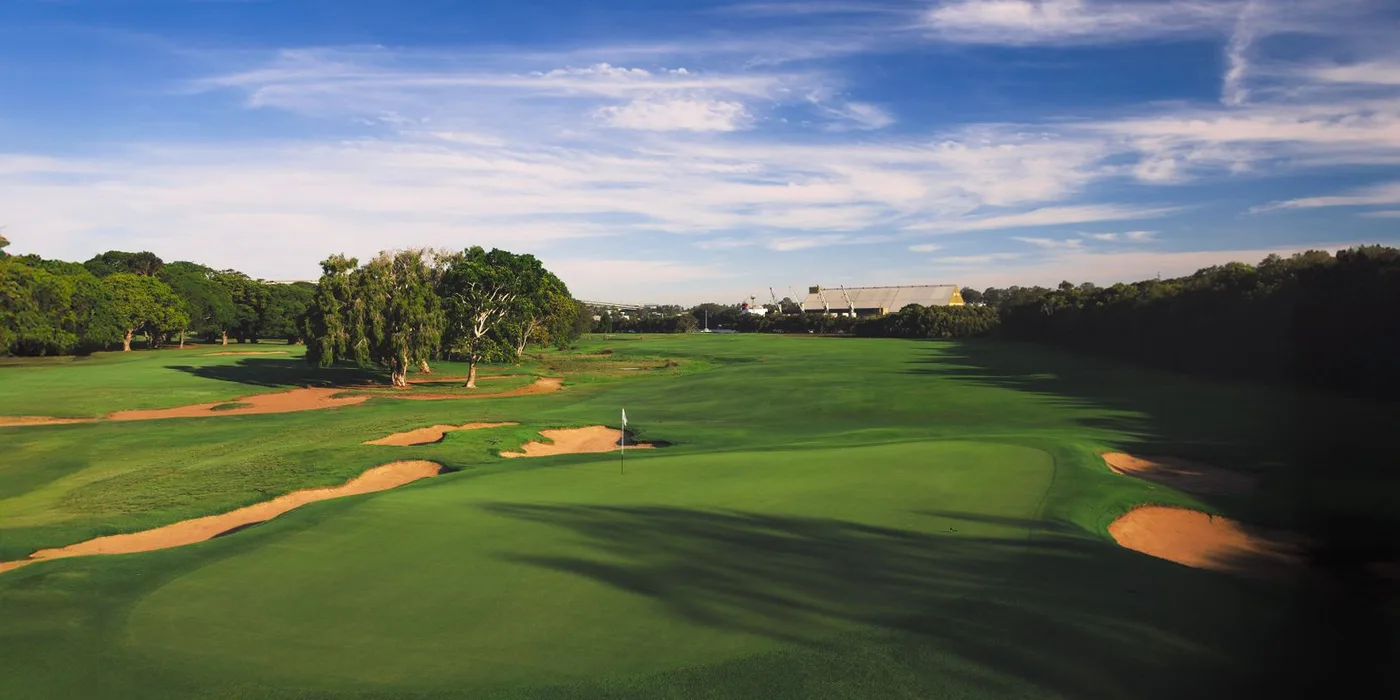
Royal Adelaide Golf Club is South Australia's most prestigious golf club and one of Australia's great heathland courses, established in 1904 on the beautiful sand ridge terrain north of Glenelg beach in Seaton. The course was substantially revised by British architect C.H. Alison during his 1926 Australian visit — the same tour that saw him visit Hirono in Japan and alter several Australian courses. Alison's influence brought tighter bunkering, more demanding angles, and a more strategic character to a layout that had developed organically from its Victorian-era origins. The sandy heathland terrain is characteristic of Adelaide's coastal golf environment: fine fescue-adjacent grasses, native heath and ti-tree scrub, and firm, running conditions that reward links-style ground game. Royal Adelaide has hosted the Australian Open multiple times and remains South Australia's benchmark course for both conditionings and strategic quality. The club stands on the boundary of Glenelg's famous beach suburb, creating an unusual juxtaposition of heathland golf and suburban beach culture.
- Established 1904 — South Australia's oldest and most prestigious golf club
- C.H. Alison revised the design in 1926 during his celebrated Australian/Japanese tour
- Sandy heathland terrain with ti-tree scrub north of Adelaide's Glenelg beach suburb
- Host of the Australian Open on multiple occasions throughout its 120-year history
- Firm, running conditions and strategic depth make it a genuine heathland classic
History
Royal Adelaide Golf Club was founded in 1892 and established at its current Seaton site in 1904, where the sandy coastal terrain north of the Glenelg beach suburb was recognised as ideal for golf. The club was granted its royal charter and has developed continuously since. The defining moment in the course's architectural history was C.H. Alison's visit in 1926 — part of the same tour on which he visited Hirono in Japan and reshaped several Australian courses. Alison redesigned the bunkering and significantly altered several holes to create the more strategic, demanding layout that defines Royal Adelaide today. The course has hosted the Australian Open on multiple occasions and was among the first Australian clubs to achieve international ranking recognition.
Signature Holes
The par-4 8th at Royal Adelaide is the course's most celebrated hole — a medium-length driving hole where Alison's bunkering on the approach fairway demands a precise line from the tee to leave the correct angle to a green that is well protected on both sides. The par-3 14th plays from an elevated tee through a corridor of native ti-tree to a green where bunkers on three sides demand absolute accuracy with the chosen club — a hole that embodies Alison's philosophy of creating short holes of genuine difficulty without excessive length. The par-5 18th finishes toward the clubhouse through a narrowing corridor of trees, with a second shot that offers the bold player a direct line to the green across a bunker complex.
Best Time to Visit
October through April is Adelaide's Mediterranean-climate summer — reliably sunny with temperatures of 22–32°C and the driest conditions of the year. November through February is peak heat season when afternoon rounds can be uncomfortably warm; morning tee times are preferred. May through September is the cooler, greener winter and early spring, producing the firmest and fastest playing surfaces. Adelaide's wine regions — Barossa Valley, McLaren Vale, and Clare Valley — make the combination of golf and wine touring the ideal south Australian itinerary.
Playing Tips
Royal Adelaide is a private members' club — visitor access requires a member introduction or affiliation letter from a home club. The club is in Seaton, approximately 15 minutes from Adelaide CBD and 20 minutes from Adelaide Airport. Caddies are available. Combining Royal Adelaide with a Barossa Valley wine day creates a classic Adelaide two-day programme for visiting golfers who can arrange access.
— Current Weather at Royal Adelaide Golf Club
Approximate conditions · Updated every 30 min · Open-Meteo
Visit Royal Adelaide Golf Club
328 Tapleys Hill Road, Seaton, Adelaide, South Australia 5023, Australia
Adelaide, Australia
— Facilities
Practical Information
— FAQ
Frequently Asked Questions about Royal Adelaide Golf Club
Can visitors play Royal Adelaide Golf Club?
Royal Adelaide is a private members' club — access requires a member introduction or an affiliation letter from a recognised home club. Contact the club secretary to arrange visitor tee times.
What role did C.H. Alison play in Royal Adelaide's history?
British architect C.H. Alison visited in 1926 and significantly redesigned the course — tightening the bunkering, altering hole designs, and creating the more strategic layout that defines Royal Adelaide today. Alison made similar improvements at several Australian and Japanese courses on the same tour.
How many times has Royal Adelaide hosted the Australian Open?
Royal Adelaide has hosted the Australian Open on multiple occasions throughout its history, most recently in 2012.
What is the best time of year to play golf in Adelaide?
May through October offers the most consistent conditions — cooler temperatures of 14–22°C and firmer, faster playing surfaces. The summer months (November–February) can be very hot, so morning tee times are essential.
Keep exploring golf courses around the world
More Golf Courses